







- 首頁
- Blog
- Unsatisfied with AI Website Drafts? 5 Steps to Turn Initial Drafts into Effective Business Websites
Unsatisfied with AI Website Drafts? 5 Steps to Turn Initial Drafts into Effective Business Websites
2026 / 10 / 13
Author: Website Development & Design Team, Arachne Group Limited丨Reviewed by: Edwin, Marketing Director丨Last Updated: October 13, 2026
Building a website with AI allows you to see a homepage prototype in just a few minutes. Enter a few prompts, and the website copy, layout, and images appear ready. However, when you actually launch the site, you might realize that the website design looks overly familiar, the content doesn't reflect your brand, the mobile experience is clunky, or you don't even know how to add booking, membership, or other functions.
AI can speed up initial draft creation, but it won't automatically understand your brand, customers, or operational needs. To transform an initial draft into a truly functional website, you must first clarify your website goals and target audience, provide concrete brand assets, and ultimately inspect the content, user flow, and features against real-world requirements.
Key Takeaways:
▪ Common AI Website Pain Points: Insufficient prompts lead to generic content, pages lack clear next-step guidance, and functional scalability exceeds initial expectations.
▪ 5 Steps to Optimize an AI Website Draft:
Define Goals: Establish core website objectives (e.g., bookings, inquiries, or purchases).
Understand Audience: Define clear audience personas and brand differentiators.
Structure Layout: Map out an intuitive browsing path from a first-time visitor's perspective.
Supply Assets: Feed real brand, product, and FAQ data into AI for generation, followed by strict human verification.
Conduct Testing: Test on mobile, desktop, and with neutral visitors to uncover blind spots.
▪ SEO & AI Guidelines: Google explicitly states that using AI does not violate its search guidelines; the focus remains on whether the content offers practical value and accuracy to readers.
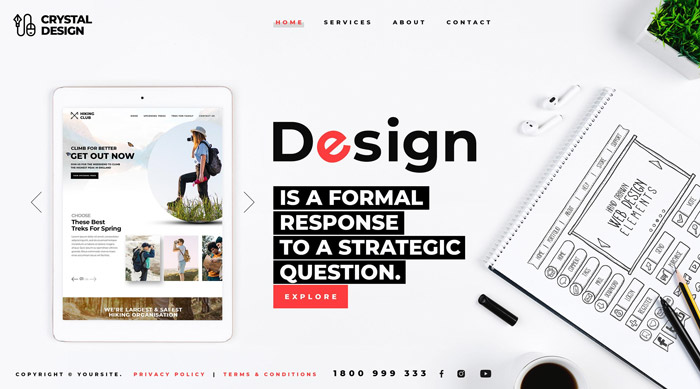
AI website builders reduce the time needed to go from a blank canvas to an initial draft, but a draft is not a finished product. If a website is meant to represent your brand, guide visitors' decision-making, or handle booking and sales operations, it still requires further strategic planning and testing.
Here are common reasons why AI websites fall short of expectations:
If you simply input "build me a modern, professional corporate website," AI won't know who your core audience is, how your brand differs from competitors, or what action visitors should take after browsing.
When context is lacking, AI typically generates content based on generic templates. This results in pages filled with headers, service overviews, icons, and contact buttons that look complete on the surface but fail to highlight what sets your company apart. What needs supplementing here isn't more adjectives, but concrete service features, customer pain points, and genuine brand assets.
When visitors land on a site, they usually seek quick answers: What services do you offer? Who are they for? What makes you unique? If I want to make an inquiry or purchase, what should I do next?
If pages fail to answer these questions clearly, visitors are likely to leave after browsing—no matter how attractive the visual design is. Web design is more than arranging text and images; it's about structuring information around visitor questions and making the next steps effortless to find.
Most people start using AI website tools merely to present brand information. Over time, requirements grow to include bookings, online payments, user logins, content management, or integrations with CRM and inventory systems. Without assessing these needs beforehand, the chosen platform or architecture may lack flexibility, making subsequent modifications far more time-consuming.
Therefore, "creating pages" and "building a sustainable website" are two distinct tasks. Planning must consider not only immediate needs but also future content management, ongoing maintenance, and potential feature additions.
AI is excellent for accelerating the website design and creation process, but it shouldn't replace strategic assessment, brand decision-making, or practical user testing. For example, AI can help draft page sitemaps, generate multiple homepage headline options, summarize FAQs, improve copy readability, or provide starter code snippets for simple pages.
It can also assist in brainstorming visual directions and organizing wireframe content to kickstart team discussions. However, AI-generated output must be verified: Are service details, pricing, workflows, case studies, and promises accurate? Does the tone align with your brand voice? Does the content answer real customer concerns?
Furthermore, Google official guidance indicates that appropriate use of AI or automation does not inherently violate Search guidelines. The core focus is whether the content is helpful to readers rather than created to manipulate search rankings. Therefore, while AI can assist in production, content accuracy, utility, and sources must be manually verified prior to publication.
To get an AI-generated website closer to your ideal outcome, avoid repeatedly asking it to "make it more premium." Instead, provide clear parameters upfront.
Summarize the website's primary objective in one sentence, such as:
• Help potential clients understand our services and submit inquiries.
• Help consumers find products and complete purchases.
• Enable visitors to book consultations or services.
• Establish corporate presence so clients can easily find and understand the company.
While a website can serve multiple functions, choosing one primary goal determines homepage messaging, navigation structure, and call-to-action button placements.
Inform the AI about your target audience, their pain points, and their primary criteria when evaluating services. Simply specifying "a young demographic" is too vague; detail their usage scenarios, requirements, and decision-making factors.
Next, define what sets your business apart. For instance, are your services customizable? Does your team specialize in specific industries? Is your collaboration process transparent? Verifiable facts convey brand identity far better than abstract words like "professional, innovative, or dedicated."
List the required web pages first, then map out how visitors navigate from one page to the next. Corporate websites typically include a homepage, service details, case studies, about us, FAQs, and a contact page—though strict adherence to identical templates is unnecessary.
Review page by page from a new visitor's perspective: What do they need to know first? What questions might arise after reading service descriptions? Is contact information readily accessible? Structuring pages around user questions turns a website from a simple repository into a clear user journey.
Provide AI with your company profile, service offerings, product features, customer FAQs, existing copy, and visual references. Specify the desired page layout and brand tone. You can also request multiple headline or paragraph variations to compare options rather than settling for the first result.
Once the initial draft is generated, verify service details, workflows, data, case studies, and claims point by point. If the AI invents non-existent services or unsupported statistics, edit or remove them immediately—do not mistake fluent phrasing for factual accuracy.
Once the site is built, review it across mobile and desktop devices, then invite individuals unfamiliar with the site to perform simple test tasks. For example, ask: "Find out what services this company offers and where to submit an inquiry." Observe their interaction without giving hints to see where they succeed or stumble.
This quick test exposes frequently overlooked issues, such as deeply buried key information, unclear button labels, or clumsy mobile navigation. Test findings provide actionable direction for improvements. If sample sizes are small, treat them as qualitative observations rather than statistical conclusions.
If your need is limited to a simple landing page or a basic information sheet, AI website builders may suffice for a fast start. However, if your website serves as a core channel for brand communication, drives lead generation, or requires complex feature integrations, evaluating professional support is highly recommended.
Consider seeking professional support for website strategy, web design, or website development under the following conditions:
• After site launch, visitors still struggle to understand service offerings or how to get in touch.
• The site requires membership, booking, payment gateway, content management, or third-party system integrations.
• Your brand requires a unique visual identity that standard templates cannot accommodate.
• The site contains extensive content requiring information architecture reorganization and user flow optimization.
• The website is planned for ongoing expansion, requiring maintainable architecture for future updates.
• Your team needs assistance auditing mobile experience, performance speed, and fundamental SEO settings.
A professional team's role goes beyond visual polish. It encompasses clarifying strategic requirements, structuring information architecture, custom-developing features tailored to actual workflows, and conducting rigorous pre-launch testing. While AI can assist parts of the process, brand direction, feature trade-offs, and user journeys still rely on expert human judgment.
Yes. Many AI website builders and CMS platforms offer drag-and-drop visual editors to help non-technical users set up basic pages. However, platforms differ in scalability, data control, design flexibility, and maintenance requirements. Confirm your long-term goals and required features before choosing a tool.
It depends on your brand and operational requirements. For displaying basic company info, AI can accelerate initial setup. If your business relies on brand differentiation, advanced functionality, system integrations, or long-term scalability, evaluate whether the underlying technical framework can support these needs. Avoid judging operational readiness based solely on how complete the homepage looks.
Provide concrete brand positioning, target audience details, product or service highlights, real case studies, brand assets, and tone-of-voice examples. Have someone familiar with the brand review each page to remove generic fluff and add genuine company experience. True brand identity comes from articulating real differentiators rather than adding marketing buzzwords.
Direct publication without review is not recommended. Verify that service details, processes, data, and claims are entirely accurate. Ensure the tone matches your brand and directly addresses your audience's questions. If external references or facts are cited, verify their original sources and validity.
Using AI tools will not automatically harm SEO. What matters most to search engines is whether your site offers helpful, accurate, and reliable content that addresses user intent smoothly. However, generating mass automated content solely to manipulate search engine rankings violates Google's spam policies.
Monitor whether visitors can easily locate key information, if inquiry flows are smooth, whether the mobile experience is seamless, and if the site supports current business goals. If your website no longer reflects your brand, is difficult to update, or suffers from broken functional features, it is worth evaluating a redesign of its structure, design, and technical stack.
AI accelerates the initial stages of website creation, but it cannot make brand decisions, comprehend customer requirements, or ensure every feature aligns with operational needs. To make a website truly functional, define your goals and target audience clearly, feed authentic brand assets, and refine the draft through human review and user testing.
Arachne Group Limited provides website planning, web design, and custom web development services. Starting from brand requirements and user experience, we assist businesses in building websites that effectively communicate services, meet business objectives, and offer long-term scalability.
Have an AI website draft but unsure whether to revise content, layout, or features next? Share your website link and current challenges with us—Contact Us to discuss tailored solutions.
Phone: 852-37499734
Email: [email protected]
WhatsApp: 6315 1000
Building a website with AI allows you to see a homepage prototype in just a few minutes. Enter a few prompts, and the website copy, layout, and images appear ready. However, when you actually launch the site, you might realize that the website design looks overly familiar, the content doesn't reflect your brand, the mobile experience is clunky, or you don't even know how to add booking, membership, or other functions.
AI can speed up initial draft creation, but it won't automatically understand your brand, customers, or operational needs. To transform an initial draft into a truly functional website, you must first clarify your website goals and target audience, provide concrete brand assets, and ultimately inspect the content, user flow, and features against real-world requirements.
Key Takeaways:
▪ Common AI Website Pain Points: Insufficient prompts lead to generic content, pages lack clear next-step guidance, and functional scalability exceeds initial expectations.
▪ 5 Steps to Optimize an AI Website Draft:
Define Goals: Establish core website objectives (e.g., bookings, inquiries, or purchases).
Understand Audience: Define clear audience personas and brand differentiators.
Structure Layout: Map out an intuitive browsing path from a first-time visitor's perspective.
Supply Assets: Feed real brand, product, and FAQ data into AI for generation, followed by strict human verification.
Conduct Testing: Test on mobile, desktop, and with neutral visitors to uncover blind spots.
▪ SEO & AI Guidelines: Google explicitly states that using AI does not violate its search guidelines; the focus remains on whether the content offers practical value and accuracy to readers.
Why Do AI-Generated Websites Fail to Meet Expectations?
AI website builders reduce the time needed to go from a blank canvas to an initial draft, but a draft is not a finished product. If a website is meant to represent your brand, guide visitors' decision-making, or handle booking and sales operations, it still requires further strategic planning and testing.
Here are common reasons why AI websites fall short of expectations:
Insufficient Prompting Leads to Generic Content
If you simply input "build me a modern, professional corporate website," AI won't know who your core audience is, how your brand differs from competitors, or what action visitors should take after browsing.
When context is lacking, AI typically generates content based on generic templates. This results in pages filled with headers, service overviews, icons, and contact buttons that look complete on the surface but fail to highlight what sets your company apart. What needs supplementing here isn't more adjectives, but concrete service features, customer pain points, and genuine brand assets.
Complete Page Layouts, but Visitors Don't Know the Next Step
When visitors land on a site, they usually seek quick answers: What services do you offer? Who are they for? What makes you unique? If I want to make an inquiry or purchase, what should I do next?
If pages fail to answer these questions clearly, visitors are likely to leave after browsing—no matter how attractive the visual design is. Web design is more than arranging text and images; it's about structuring information around visitor questions and making the next steps effortless to find.
Functional Requirements Exceed Initial Expectations
Most people start using AI website tools merely to present brand information. Over time, requirements grow to include bookings, online payments, user logins, content management, or integrations with CRM and inventory systems. Without assessing these needs beforehand, the chosen platform or architecture may lack flexibility, making subsequent modifications far more time-consuming.
Therefore, "creating pages" and "building a sustainable website" are two distinct tasks. Planning must consider not only immediate needs but also future content management, ongoing maintenance, and potential feature additions.
What Tasks Can AI Tools Assist with in Website Creation?
AI is excellent for accelerating the website design and creation process, but it shouldn't replace strategic assessment, brand decision-making, or practical user testing. For example, AI can help draft page sitemaps, generate multiple homepage headline options, summarize FAQs, improve copy readability, or provide starter code snippets for simple pages.
It can also assist in brainstorming visual directions and organizing wireframe content to kickstart team discussions. However, AI-generated output must be verified: Are service details, pricing, workflows, case studies, and promises accurate? Does the tone align with your brand voice? Does the content answer real customer concerns?
Furthermore, Google official guidance indicates that appropriate use of AI or automation does not inherently violate Search guidelines. The core focus is whether the content is helpful to readers rather than created to manipulate search rankings. Therefore, while AI can assist in production, content accuracy, utility, and sources must be manually verified prior to publication.
How to Improve an AI Website Draft? Define Direction First, Let AI Accelerate Second
To get an AI-generated website closer to your ideal outcome, avoid repeatedly asking it to "make it more premium." Instead, provide clear parameters upfront.
Step 1: Define the Website's Primary Goal
Summarize the website's primary objective in one sentence, such as:
• Help potential clients understand our services and submit inquiries.
• Help consumers find products and complete purchases.
• Enable visitors to book consultations or services.
• Establish corporate presence so clients can easily find and understand the company.
While a website can serve multiple functions, choosing one primary goal determines homepage messaging, navigation structure, and call-to-action button placements.
Step 2: Outline Your Target Audience & Brand Identity
Inform the AI about your target audience, their pain points, and their primary criteria when evaluating services. Simply specifying "a young demographic" is too vague; detail their usage scenarios, requirements, and decision-making factors.
Next, define what sets your business apart. For instance, are your services customizable? Does your team specialize in specific industries? Is your collaboration process transparent? Verifiable facts convey brand identity far better than abstract words like "professional, innovative, or dedicated."
Step 3: Plan Page Architecture & Visitor Journeys
List the required web pages first, then map out how visitors navigate from one page to the next. Corporate websites typically include a homepage, service details, case studies, about us, FAQs, and a contact page—though strict adherence to identical templates is unnecessary.
Review page by page from a new visitor's perspective: What do they need to know first? What questions might arise after reading service descriptions? Is contact information readily accessible? Structuring pages around user questions turns a website from a simple repository into a clear user journey.
Step 4: Feed Real Brand Assets, Then Generate Drafts with AI
Provide AI with your company profile, service offerings, product features, customer FAQs, existing copy, and visual references. Specify the desired page layout and brand tone. You can also request multiple headline or paragraph variations to compare options rather than settling for the first result.
Once the initial draft is generated, verify service details, workflows, data, case studies, and claims point by point. If the AI invents non-existent services or unsupported statistics, edit or remove them immediately—do not mistake fluent phrasing for factual accuracy.
Step 5: Test on Mobile and with Neutral Visitors
Once the site is built, review it across mobile and desktop devices, then invite individuals unfamiliar with the site to perform simple test tasks. For example, ask: "Find out what services this company offers and where to submit an inquiry." Observe their interaction without giving hints to see where they succeed or stumble.
This quick test exposes frequently overlooked issues, such as deeply buried key information, unclear button labels, or clumsy mobile navigation. Test findings provide actionable direction for improvements. If sample sizes are small, treat them as qualitative observations rather than statistical conclusions.
When Should You Hire a Professional Web Design Agency?
If your need is limited to a simple landing page or a basic information sheet, AI website builders may suffice for a fast start. However, if your website serves as a core channel for brand communication, drives lead generation, or requires complex feature integrations, evaluating professional support is highly recommended.
Consider seeking professional support for website strategy, web design, or website development under the following conditions:
• After site launch, visitors still struggle to understand service offerings or how to get in touch.
• The site requires membership, booking, payment gateway, content management, or third-party system integrations.
• Your brand requires a unique visual identity that standard templates cannot accommodate.
• The site contains extensive content requiring information architecture reorganization and user flow optimization.
• The website is planned for ongoing expansion, requiring maintainable architecture for future updates.
• Your team needs assistance auditing mobile experience, performance speed, and fundamental SEO settings.
A professional team's role goes beyond visual polish. It encompasses clarifying strategic requirements, structuring information architecture, custom-developing features tailored to actual workflows, and conducting rigorous pre-launch testing. While AI can assist parts of the process, brand direction, feature trade-offs, and user journeys still rely on expert human judgment.
Frequently Asked Questions About AI Website Building (FAQ)
Q1: Can I build a website with AI if I don't know how to code?
Yes. Many AI website builders and CMS platforms offer drag-and-drop visual editors to help non-technical users set up basic pages. However, platforms differ in scalability, data control, design flexibility, and maintenance requirements. Confirm your long-term goals and required features before choosing a tool.
Q2: Are AI-generated websites suitable for official corporate use?
It depends on your brand and operational requirements. For displaying basic company info, AI can accelerate initial setup. If your business relies on brand differentiation, advanced functionality, system integrations, or long-term scalability, evaluate whether the underlying technical framework can support these needs. Avoid judging operational readiness based solely on how complete the homepage looks.
Q3: How can I make an AI-generated website feel more on-brand?
Provide concrete brand positioning, target audience details, product or service highlights, real case studies, brand assets, and tone-of-voice examples. Have someone familiar with the brand review each page to remove generic fluff and add genuine company experience. True brand identity comes from articulating real differentiators rather than adding marketing buzzwords.
Q4: Can I publish AI-generated web copy directly?
Direct publication without review is not recommended. Verify that service details, processes, data, and claims are entirely accurate. Ensure the tone matches your brand and directly addresses your audience's questions. If external references or facts are cited, verify their original sources and validity.
Q5: Does using AI to build a website negatively impact SEO?
Using AI tools will not automatically harm SEO. What matters most to search engines is whether your site offers helpful, accurate, and reliable content that addresses user intent smoothly. However, generating mass automated content solely to manipulate search engine rankings violates Google's spam policies.
Q6: How do I know if my website needs a complete redesign?
Monitor whether visitors can easily locate key information, if inquiry flows are smooth, whether the mobile experience is seamless, and if the site supports current business goals. If your website no longer reflects your brand, is difficult to update, or suffers from broken functional features, it is worth evaluating a redesign of its structure, design, and technical stack.
From AI Initial Drafts to a Truly Customized Website
AI accelerates the initial stages of website creation, but it cannot make brand decisions, comprehend customer requirements, or ensure every feature aligns with operational needs. To make a website truly functional, define your goals and target audience clearly, feed authentic brand assets, and refine the draft through human review and user testing.
Arachne Group Limited provides website planning, web design, and custom web development services. Starting from brand requirements and user experience, we assist businesses in building websites that effectively communicate services, meet business objectives, and offer long-term scalability.
Have an AI website draft but unsure whether to revise content, layout, or features next? Share your website link and current challenges with us—Contact Us to discuss tailored solutions.
Phone: 852-37499734
Email: [email protected]
WhatsApp: 6315 1000
MORE BLOG
-

What to Do If Your WordPress Site Is Slow? Speed Diagnosis, Cause Identification, and Acceleration Steps
2026/10/09 Is your WordPress site running slow? Learn how to diagnose loading issues, fix Core Web Vitals, and optimize your website speed step-by-step to boost SEO. -

Hong Kong Web Design Guide: How to Build a High-Converting WordPress Site from Scratch
2026/09/30 Complete Hong Kong WordPress guide: domain, hosting, SEO, & pricing for HK SMEs. Learn DIY vs agency web design to build high-converting websites. -
Web Design Tutorial: A Guide for Beginners—From Requirements Planning to Website Launch
2026/09/29 Learn web design step-by-step. Master site planning, wireframing, UI/UX, launch testing, and modern SEO/GEO best practices for a successful website.

